Study Questions Value of Management Consultants in Healthcare

If hospitals spend billions of dollars on management consultants, they will at least get:

  • A) stronger finances
  • B) better quality of care
  • C) streamlined operations
  • D) none of the above

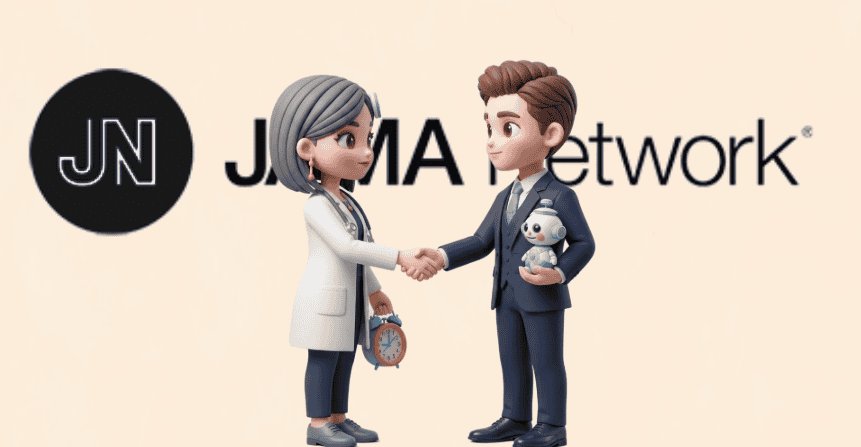
The correct answer: D as in Deloitte! You guessed it, at least according to a new study in JAMA.

  • Researchers analyzed 2,343 non-profit hospitals in the U.S. from 2009 to 2023, finding that they collectively spent over $7.8B on management consulting over that period.
  • More than 20% of the hospitals brought on consultants, and the hefty total in the previous bullet means they spent an average of $15.7M for their services.

Here’s what that got them. Researchers compared 306 hospitals that enlisted management consultants for the first time during the study period to 513 matched hospitals that toughed it out on their own.

  • Despite the substantial investment, the study found “little evidence of substantial, statistically significant, or systematic improvements” attributable to the consulting engagements.

Consultants couldn’t catch a break. The analysis showed that the hospitals that hired them saw no significant impact across any of the primary measures.

Not the financial measures. 

  • Net patient revenue was down 2.22% (P = .14).
  • Total margin was down 0.19 percentage points (P = .71).

Not the operational measures. 

  • Inpatient length of stay was up 1.71% (P = .10).
  • Total inpatient days were up 0.29% (P = .85).

Not the quality measures.

  • All insignificant, besides 30-day stroke readmissions: up 1.37 percentage points (P = .03).

Big results, with limitations. An accompanying editorial applauded the analysis, but pointed out that struggling hospitals are also more likely to seek outside help. Future research should investigate this selection bias and “the factors that predict a hospital’s decision to hire a consulting firm.”

The Takeaway

High P-values don’t mean that management consultants aren’t making an impact. They just mean that the most notable study to investigate the impact couldn’t find one…

OpenAI o1 Outperforms Physicians on Clinical Reasoning Tasks

A landmark study in Science found that OpenAI’s o1 series outperformed human physicians at multiple clinical reasoning tasks, but that doesn’t mean it’s time to hang up the scrubs just yet.

Researchers at Harvard and Beth Israel Deaconess Medical Center designed the study to evaluate whether LLMs are ready to do what physicians do on a daily basis: review messy patient charts and use that data to determine diagnosis and next steps.

  • They evaluated o1 on clinical cases ranging from patient vignettes to second opinions on 76 real-world ED assessments, which included all the noise and incomplete information that clinicians routinely encounter in the EHR.
  • The refreshingly well-designed study also incorporated a blinded evaluation with two attending physicians at BIDMC and GPT-4.

o1 came to play. On clinical vignettes evaluating management reasoning, o1-preview scored a median of 86%. Not too shabby.

  • It outperformed GPT-4, humans with GPT-4, and humans with conventional resources like UpToDate – all of which scored below 45%.

The ED cases were even more impressive. o1 offered second opinions about the diagnosis at three points along the patient’s ED journey:

  • At triage, o1 gave an exact or very close diagnosis in 67% of cases (when information in the record dump was most limited). The two physicians hit 55% and 50%. 
  • o1 still outperformed the physicians when given all the data collected by the end of the ED encounter.
  • It was only when the physicians were given the most information possible to inform their diagnosis – at the time the patient would have been admitted to the hospital – that the scores finally converged.

The cherry on top? Physician raters couldn’t tell whether the differentials came from o1 or a human. One rater couldn’t tell in 83.6% of cases, the other in 94.4%. 

  • The authors were quick to mention that these results don’t mean AI is ready to replace human physicians. They mean it’s time for rigorous research into how AI can augment care teams, serve as a second opinion, and become a safety layer for clinicians.

The Takeaway

o1 outperforming a couple internists at triage isn’t quite Deep Blue beating Gary Kasparov at chess, but it’s a step in that direction – especially considering OpenAI’s performance jump in just the last week (let alone since o1 launched in 2024).

Get the top digital health stories right in your inbox