|
OpenEvidence, Paper2Agent, and AI Won’t Replace Clinicians
By Jason Barry and Virginia Hunt
September 24, 2026
|
|
|

|
|
Together with
|

|
|
|
“The best medicine is knowing your limitations, not thinking a tool can overcome gaps in experience and expertise. You wouldn’t want an auto mechanic using an LLM to do repairs on the commercial flight you’re about to take, and you shouldn’t want an Orthopedic Surgeon using one to interpret your EKG.”
|
|
Orthopedic Surgeon Dr. Ben Schwartz.
|
|
|
For a company that loves making headlines, OpenEvidence was awfully quiet about its $250M raise last week. One guess as to why…
– Jason Barry, Managing Editor
|
|
|
|
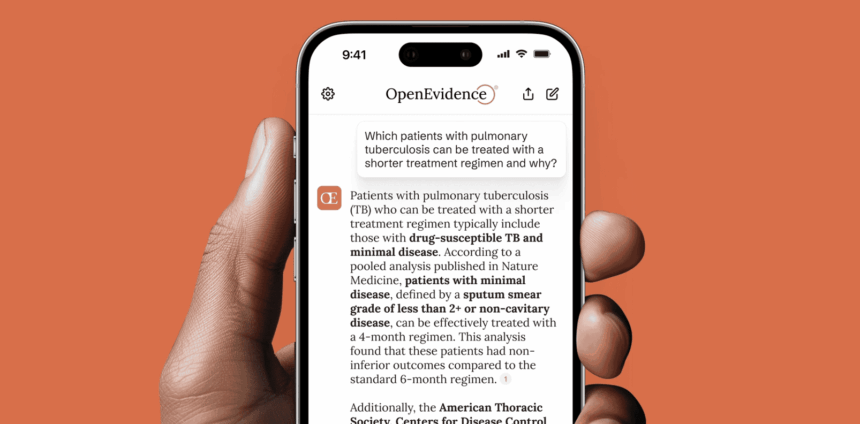
OpenEvidence just inked a major partnership as it breaks into drug development, and it didn’t even make a fuss about the mega-round it raised to fuel it.
Let’s start with the partnership. OpenEvidence is teaming up with Memorial Sloan Kettering and was generous with the details when explaining the move to Forbes.
- The collaboration itself was fairly straightforward. MSK is plugging OE into its Epic workflows, and OE is integrating MSK’s OncoKB precision oncology database into its engine to let physicians access the treasure trove of data on genetic variants of different cancers and their treatments.
The fine print was huge. A single sentence bolted onto a paragraph in the middle of the Forbes article revealed that OE quietly raised $250M at a $15B valuation last week. For context:
- January – $250M at $12B, with a big announcement and press tour for CEO Daniel Nadler.
- July – The Information reported OE was weighing a $200M raise at $20B.
- September – $250M at $15B, revealed in a blurb sandwiched between partner coverage.
Not necessarily a down round, but the silence was deafening. Especially considering how much other OE news has been hitting the wire recently:
- a new family of four AI models featuring Darwin, the first AI in history to score a perfect 100% on the MedQA benchmark.
- a partnership with Anthropic to give physicians in 100 lower-income countries open access to OE’s clinical decision support.
But wait, there’s more. Nadler told Forbes that OE plans to start developing its own oncology therapies, with the first drug entering clinical trials before year-end and another three candidates on the way next year, starting with rare cancers.
- Bit of a head scratcher, but OE isn’t planning to compete with Lilly or Pfizer on 10,000-patient trials. It’s going after “the stuff that they are not doing, and maybe can’t do” because they don’t have OE’s “economies of scale in finding these patients.”
Why go after drug development? Probably the same reason as the funding radio silence – competition is compounding.
- As OE expands from clinical search into nearby workflows, it’s not only bumping up against Wolters Kluwer and Elsevier, it’s also competing with new heavyweights like Abridge and Doximity.
- Abridge has giant friends in the pharma space and is only making more, while Doximity just reported a blowout quarter on the back of its solutions that compete directly with OE.
- Doximity’s call also snuck in a rumor that an unnamed “major system” is cracking down on shadow AI and banning a product from a direct competitor. Maybe OE, maybe true.
The Takeaway
For all the AI fearmongering that’s been going on recently, it’s nice to see OpenEvidence randomly decide to cure cancer, regardless of the valuation it hit while funding the new quest.
|
|
Redefining Patient Monitoring for Obesity & Diabetes
Weight management programs live and die by adherence. Discover why partners like Calibrate,
9am Health, and Wondr Health trust Withings to keep members weighing in, with
cellular-connected scales that deliver instant weight insights, full body composition data, and the
lowest possible barrier to action throughout their weight loss journey.
|
|
How Clinicians Are Using AI to Find Relief
Clinicians are facing a documentation burden that’s outpaced every attempt to contain it, and they’re adopting AI to tackle the crisis faster than health systems can keep pace. Download Heidi’s new report to see how over 1,800 clinicians around the world are already using AI to find relief, and what that means for the institutions still catching up.
|
|
- AI and the Clinical Workforce: A solid perspective in NEJM mapped out why some healthcare jobs might eventually be replaced by AI, but there’s strong economic arguments against many of the narratives around clinician displacement. Three of the biggest reasons why AI won’t be eliminating clinician jobs any time soon included: Jevon’s paradox (more efficiency leads to more use), the “lump of labor” fallacy (the type of work changes, but doesn’t disappear), and the art of medicine (AI is great at clinical tasks, not clinical skills).
- DexCare Acquires Mila: Patient navigation company DexCare acquired Mila Health, whose AI agents call, text, and chat with patients to get them scheduled, prepared, and seen. Mila’s agents will run on DexCare’s access data model, which codifies scheduling rules, referral requirements, and provider preferences into one governed rulebook (Tampa General says DexCare codified 260 scheduling policies and uncovered 50+ gaps in the process). Mila reports a 54% patient response rate on outbound, 50% fewer no-shows, and marks DexCare’s second acquisition since spinning out of Providence in 2021.
- Abridge Lands VA: Abridge got the nod from the VA to provide ambient AI under a five-year enterprise contract, a multiple-award vehicle with a $776M ceiling across all eligible vendors. Abridge’s AI-native clinician intelligence platform started at five VA medical centers and earned the trust of one clinician at a time as it scaled to 75+ VA medical centers through the competitively awarded pilot, running on both VistA/CPRS and the Federal EHR as the agency works through its long-running Oracle migration.
- AI Risks in Geriatric Care: A large study in JAMA Network Open revealed that Epic’s algorithm for predicting one-year mortality significantly overstates the risk of death in geriatric patients. Among 117k Trinity Health patients and 94k Kaiser Permanente patients hospitalized for 36+ hours, the algorithm showed “high discrimination but poor calibration” in both cohorts. A companion commentary argues “the challenge is not simply whether a model performs well, but whether it is implemented in a way that supports appropriate decision-making.”
- Ayble’s $16M Series A: Ayble is ready and able to expand its AI-enabled GI and autoimmune clinic after closing a $16M Series A, bringing its total funding to $27M. GI conditions cost the U.S. healthcare system over $136B annually – more than heart disease or diabetes – but Ayble aims to streamline care (and reduce costs) by combining dietitians, physicians, behavioral specialists, and pharmacists into one team. Big-name partners like Cleveland Clinic and Mayo Clinic are already endorsing Ayble’s approach.
- Paper2Agent: Stanford researchers published Paper2Agent in Nature, a new AI tool that converts a research paper and its codebase into an agent that serves as a “virtual corresponding author.” The agent answers questions about the paper, applies its methods to new datasets, and collaborates with agents built from other papers. Of 100 computational biology papers run through the pipeline, 74 were successfully converted, and the resulting agents hit 91% accuracy on benchmark queries.
- Atropos Precision Evidence Bench: Atropos released a first of its kind precision health benchmark that it aptly dubbed Precision Evidence Bench, which evaluates how well LLMs can answer clinical questions that include patient context. As patients rush to upload medical records to LLMs, and physician LLM queries pull patient histories into context, the critical evaluation that needs to be done is whether the answer and evidence presented actually match to the context the patient presents with. Precision Evidence Bench is Atropos’ answer to that problem.
- (Partial) Health Coverage: One-third U.S. adults with private health coverage are still weighed down by medical debt according to a recent survey from the Commonwealth Fund. The numbers highlighted the uneven burden of these stressors on women, Black, Hispanic, and low- or middle-income individuals. Of the respondents who reported debt, 40% drained a portion of their savings on necessary medical care and 30% were forced to delay treatment…to catch up on bills for necessary care.
- Redox Signs the CMS Pledge: Redox was approved as a CMS Health Tech Ecosystem Aligned Network across four categories: Data Networks, Electronic Prior Auth, Bulk FHIR, and Pharmacies. Aligned Networks commit to giving patients, providers, and their apps real-time access to complete health information without friction or delay. That’s pretty much the exact vision that Redox has been building toward for over a decade, and it’s bringing over 12k+ connected systems and 20B+ annual transactions with it.
- Young Health Workers Hop Jobs: A new survey from The Harris Poll showed that while 70% of Gen Z healthcare workers plan to look for a new role in the next year, nearly the same number expect to stay with one employer for at least five years. For the three-fourths of employers who say recruiting or retaining these workers is top of mind, they’ll have to offer up the clear opportunities for workforce advancement that 89% of young healthcare professionals are looking for.
- Productivity Swings by Specialty: A SullivanCotter survey of 575 healthcare organizations employing 235k physicians found that annual increases in productivity varied from 0.8% in primary care to 2.8% in adult medical care, which includes fields ranging from cardiology to endocrinology. The good news for all topline specialty categories is that median compensation rose, with the median payment boost sitting at 7.2%.
|
|
Clinician-First Copilot for Value-Based Success
Navina’s AI copilot brings clinical intelligence directly to care teams, turning fragmented data into actionable insights that transform value-based workflows from the back office to the point-of-care. Designed for and loved by physicians, Navina’s Best in KLAS AI reduces missed diagnoses while improving quality metrics and risk adjustment accuracy. Discover how practices are leveraging Navina to enhance VBC performance and improve the clinician experience.
|
|
Telehealth Has a Ceiling. Here’s How MetroHealth Broke It
For too many patients, traditional telehealth visits often lead to a dead end. To reach its full potential, virtual care needs a reboot. The MetroHealth System partnered with Ovatient to do just that with a new virtual-first care model built on the EHR and connected to patients’ ongoing care journeys. A study of 50k patient encounters shows the results: 100% of patients were able to have a new appointment within 3 days, 35% of virtual primary care patients were net new or re-engaged, and virtual urgent care achieved 17% lower 72-hour ED use than in-person visits. Read the report to learn more about MetroHealth’s approach.
|
|
Unlock Better Care With LOLA
Whether you’re looking to augment your team’s capacity or capabilities, Tucuvi’s clinically validated LOLA voice agent is purpose-built to make it happen – and has the success stories to prove it. Hear first-hand from Tucuvi’s customers how LOLA is empowering clinical teams to care for patients while maximizing ROI.
|
|
- aking Healthcare Feel More Human: Abridge has always believed that the best healthcare technology should make healthcare feel more human. That means focusing on the most human signal we have: the conversation. Head over to CEO Shiv Rao’s latest blog to see Abridge’s vision for bringing the broader healthcare ecosystem into the picture, so clinicians can focus more on the practice of medicine and less on the process of medicine.
- State of Payor Enrollment and Credentialing: Over half of provider orgs are losing revenue due to credentialing delays – with many missing out on over $1M annually. Medallion’s new report unpacks the forces quietly undermining operational and financial performance, and how leaders across the industry are addressing them. Head over to the full report to get insights tailored to your role and org type.
- Turning Ideas Into Action: Healthcare has never been short on great ideas. What is new is the ability to turn them into reality at the pace patients need. Discover how Bunkerhill Health is closing the distance between knowing and doing, so providers can get back the two things they never have enough of: the time and the clarity to care for people.
|
|
|
|
|