|
Patients Want AI, Stepful, and Hinge Walks the Talk
By Jason Barry
June 11, 2026
|
|
|

|
|
Together with
|

|
|
|
“We rarely hear people talk about the cost of getting AI-enabled healthcare, but we will soon… cost is becoming a decisive factor in whether patients accept AI in their care.”
|
|
Johns Hopkins Professor Tinglong Dai
|
|
|
DHW’s in New York this week soaking up the energy from the NBA Finals, the World Cup, and of course the first-ever Abridge Keynote (livestream kicks off today at 12pm EDT). We might not be able to help with basketball or soccer tickets, but here’s a front-row seat to the biggest show in ambient AI.
|
|
|
|
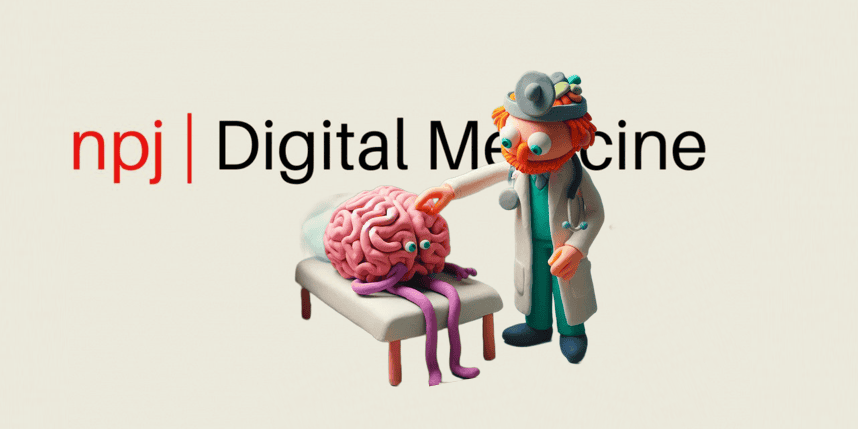
New research in npj Digital Medicine suggests that patients might be warming up to medical AI, at least if it’s less expensive than seeing an actual doctor.
Here’s the setup. Johns Hopkins researchers recruited 248 U.S. adults with type 1 diabetes, then presented them with scenarios where they were due for an annual diabetic eye screening.
- Diabetic retinopathy is the leading cause of blindness among working-age adults, and autonomous AI tools that can diagnose the disease from retinal images are already cleared by the FDA and in clinical use.
- In each scenario, one of these autonomous AI tools was made available as an alternative to a specialist referral.
The catch was the copay. Participants were randomized to have the AI offered with either a $50 copay, or with the copay waived by their insurer or the AI developer.
Fifty bucks is fifty bucks. More than 80% of participants opted for the AI tool when the copay was waived, compared to 43% who chose AI when the copay wasn’t waived.
- Not only did more participants opt for the AI screening when there was no copay, but participants also perceived the AI as more effective.
- It didn’t matter whether the copay was waived by the AI developer or their insurer.
There was one major caveat. Patients who chose AI over a traditional screening with a human specialist were far more likely to seek reconfirmation from their doctor after getting the results.
- The AI group was nearly 3x more likely to seek reconfirmation after abnormal results, and still nearly 50% more likely to ask for a second look after getting normal results.
The trust isn’t there yet. AI might be able to give patients results, but they still want to hear from a medical professional to verify those results.
- The authors point out that human oversight is still clearly a top priority for patients, and that “it’s crucial to address the persistent preferences for provider follow-up and verification, even when AI results are normal.”
The Takeaway
Financial incentives remain undefeated, but this study confirmed that you can’t put a price on trust with AI in medicine.
|
|
Execution for Every Workflow
Health systems have no shortage of ideas for improving care and operations. Bunkerhill lets them bring those ideas to life – at scale, across service lines, and around the clock. Discover how the Carebricks platform is empowering clinical and operational teams to deploy AI agents that turn the data they have into the actions they need.
|
|
- Health Catalyst Divests Vitalware: Health Catalyst is offloading its Vitalware mid-revenue cycle business to RCM vendor Med-Metrix for $147M – roughly 4x Vitalware’s 2025 revenue. The divestiture will apparently sharpen Health Catalyst’s focus on “driving measurable improvement for health systems across cost, clinical, and consumer performance.” It sounds like the proceeds are going straight toward tackling HC’s debt load and cleaning up the balance sheet.
- Stepful Series B: Healthcare training platform Stepful locked in $31.5M of Series B funding to help chip away at the projected shortage of 3.2M allied health workers by the end of this year. Stepful trains medical assistants, pharmacy techs, and other entry-level roles through virtual cohort-based courses, with its grads posting an 87% pass rate on their NHA CCMA exams (ten points above the national average). The fresh funds were earmarked to continue expanding Stepful’s B2B business, which already feeds talent pipelines for partners like Ohio State University Physicians and Johns Hopkins All Children’s.
- Hinge Walks the Talk: Hinge Health just put out one of the largest claims-based ROI studies we’ve ever seen to back up its virtual MSK platform. The study analyzed 204k adults with commercial coverage across nearly 1k employers, finding that Hinge delivered a 3x ROI and average savings of $2,941 per member per year on overall MSK medical costs. The ROI stemmed from an impressive mix of factors: Hinge members had 69% fewer surgeries, 61% fewer injections, and 68% fewer imaging scans compared to matched controls over five years.
- Anomaly Debuts Manage: Anomaly took the lid off Manage, its new AI engine built to give managed care teams more leverage in contract negotiations. Manage analyzes every claim across every payor a health system contracts with, documenting when payors deny claims, downcode services, request excessive records, or clawback payments. It then shows how payors stack up to their peers, how much these tactics are costing the provider, and delivers documented, claim-level evidence for provider orgs to bring to the negotiation table.
- Americans Blame Payors: Americans primarily blame payors for rising healthcare costs, at least according to a survey commissioned by the hospital-backed Coalition to Strengthen America’s Healthcare. The poll found that 47% pin rising spending on corporate health insurers, followed by 36% who blame the federal government and 34% who blame drug companies (34%). AHIP fired back that the survey was skewed by design, noting hospital costs account for over 40 cents of every premium dollar.
- Break the Barrier: If you’ve been sitting on an idea to improve healthcare but looking for a nudge to turn it into a real solution, then Break the Barrier might be the best way to take that first step. BtB is a national AI innovation competition that’s giving anyone with an idea and some conviction a shot at getting a direct investment and a spot in Redesign Health’s new Spark accelerator program. The prompt is the best part: submit a one-page statement identifying a specific healthcare barrier, then design a solution and present it any way you like (5 minute video pitch, slide deck, etc.). You can find all the details here.
- Physical AI PaaS: Cognizant debuted a Physical AI Platform-as-a-Service aimed at helping healthcare orgs scale “Physical AI” across labs, clinical operations, and supply chains. Physical AI technologies (clinical robotics, lab automation, connected medical devices) face scaling challenges like fragmented infrastructure and disconnected data environments, so Cognizant’s platform is designed to address this by connecting physical systems into a unified AI layer and enabling governed deployment in safety-critical environments.
- Caregility + Microsoft: Caregility is teaming up with Microsoft to bring AI documentation to nurses at the bedside. The partnership integrates Microsoft’s Dragon Copilot into Caregility’s smart room ecosystem, using in-room sensors and voice commands so nurses can capture critical information without touching a keyboard. The integration builds on Caregility’s expanding Care Square ecosystem of interoperable bedside sensors that includes audio, video, radar, and air-sensing endpoints to support continuous patient monitoring.
- Clinical AI Adoption Grows: Philips’ latest Future Health Index brought a nice update regarding clinical AI adoption, finding that AI is finally moving “from promise to practice.” Researchers surveyed over 2k healthcare professionals and 20k patients across 10 countries, finding that 36% of providers said AI helped them see more patients, while 49% of clinicians said AI saved them time equivalent to three full working weeks a year. Better yet, 27% said AI helped them identify or prevent a potential medical error at least three times in the last three months.
- AI Heals at Home: University of Utah Health shared the AI secret sauce that allowed it to scale its Heal at Home program from two specialties in 2021 to over 20 specialties serving 1,500+ patients. U of U Health built an AI tool that continuously reviews vitals, labs, and exclusion criteria to flag patients ready for home-based care as opposed to having hospitalists manually comb through 160-patient censuses to find eligible candidates. The tool reportedly acts less like an autonomous decision-maker and more like a highly efficient clinical assistant, and Heal at Home is already producing fewer ED visits and readmissions than traditional home health discharges.
|
|
How MUSC Is Bringing Care Closer to Home
MUSC Health teamed up with Ovatient to accomplish a simple goal: ensure access to care isn’t determined by a ZIP code. A third of South Carolina residents live in rural areas, but travel barriers don’t make preventative care any less crucial. See how Ovatient’s virtual-first approach is improving access to urgent care, primary care and integrated behavioral health and reducing leakage – without MUSC providers doing the heavy lifting.
|
|
Redefining Patient Monitoring for Obesity & Diabetes
Weight management programs live and die by adherence. Discover why partners like Calibrate,
9am Health, and Wondr Health trust Withings to keep members weighing in, with
cellular-connected scales that deliver instant weight insights, full body composition data, and the
lowest possible barrier to action throughout their weight loss journey.
|
|
Privia Accelerates VBC Success With Navina
How do you give physicians new AI tools to accelerate VBC without slowing them down? Privia Health found its answer with Navina. They co-designed an under-one-hour training program that onboarded 800+ clinicians in the first year, driving 87% weekly active usage while providing clearer visibility into their patient panels. Read the full case study to see what it takes to make adoption stick and outcomes follow.
|
|
- Evidence, in the Flow of Care: Heidi brings trusted guidelines and peer-reviewed research directly into clinical workflows so decisions don’t stall care. Clinicians get clear, evidence-based answers without leaving the conversation. No ads, no limits, and no outside interests getting in the way of care. Find out how with Heidi Evidence.
- Same Tool, New Name, Better AI: DoxGPT is now called Ask, and it’s powered by a new agentic reasoning engine that delivers better, faster, and more reliable responses. Physicians can still find verified answers to complex clinical questions, integrated drug references, and full-text access to over 2,000 top journals – all in the Doximity workflows they’re already using every day. Don’t wait, Ask.
- State of Payor Enrollment and Credentialing: Over half of provider orgs are losing revenue due to credentialing delays – with many missing out on over $1M annually. Medallion’s new report unpacks the forces quietly undermining operational and financial performance, and how leaders across the industry are addressing them. Head over to the full report to get insights tailored to your role and org type.
|
|
|
|
|