|
Amazon Health Connect, Digital GI, and More Studies Than Evidence
March 9, 2026
|
|
|

|
|
Together with
|

|
|
|
“When technology adapts to the way people live and work, adoption follows.”
|
|
AWS Applied AI Solutions SVP Colleen Aubrey
|
|
|
Clinical AI models are accelerating in capability, but evidence of their true impact remains limited. The ARISE Network’s State of Clinical AI report is the most complete review we’ve seen of a field that’s moving faster than its evaluation practices, and two of the clinicians that made it happen – Dr. Peter Brodeur and Dr. Liam McCoy – take us through their top takeaways on the latest episode of the Digital Health Wire Show.
|
|
|
|
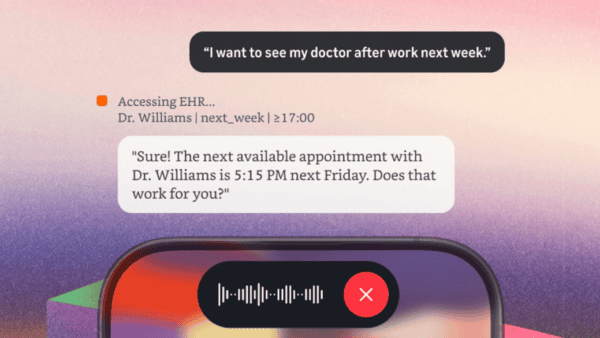
If the competition for the back office was already hot, it’s a certified wildfire after last week’s debut of Amazon Health Connect.
Amazon is pitching Amazon Connect Health as a purpose-built agentic AI solution for the administrative work that gets in the way of care. That’s definitely not fun to read for all the companies that had the same tagline on their booth at ViVE.
It comes with five capabilities straight out of the box:
- Patient verification
- Appointment scheduling
- Pre-visit summaries
- Ambient documentation
- Medical coding
What’s the core use case? AWS Director of Healthcare AI Naji Shafi says it’s the entire patient journey.
- When a patient calls to book an appointment, Amazon Connect Health answers immediately, confirms their identity, checks their coverage, and lines up the visit while they’re still on the line.
- Before the visit, it reviews their complete medical history across care settings, then surfaces previsit insights like active conditions or trends that might be relevant to closing care gaps.
- During the visit, it drafts clinical notes for provider review in real-time, with every detail linked back to the moment in the conversation where it was discussed.
- After the visit, it generates patient-friendly summaries and the medical codes needed for billing, allowing the visit to be payor-ready and submitted within minutes.
But wait, there’s more. Amazon Connect Health integrates natively with Epic, and connects to 100+ EHRs and 35+ HIEs through data integration partners like Redox.
- It’s also built entirely on AWS HealthLake, the cloud giant’s FHIR data repository that’s now getting new agentic capabilities to help convert records into standard formats.
Early users love it. Amazon One Medical was the perfect sandbox for polishing Amazon Connect Health in clinical settings before opening it to outside partners. It shows in the results.
- UC San Diego Health is saving a minute per call, diverting 630 hours a week from patient verification to direct support, and slashed call abandonment by 30%.
- Netsmart’s EHR supports more than 1,300 community provider orgs, and it saw ambient documentation adoption skyrocket 275% – and better staff retention as a result.
The Takeaway
There were already tons of agentic AI solutions competing to automate healthcare’s administrative waste, and now there’s one that’s bankrolled by the biggest bookstore in human history. It’s a crowded space, but $1 trillion per year is also enough bloat to go around.
|
|
Abridge Named #1 Best in KLAS – Again
KLAS just named Abridge #1 Best in KLAS for Ambient AI for the second year in a row. The recognition was based on direct customer feedback from the nation’s largest and most complex health systems, which gave Abridge the highest overall satisfaction score and A+ ratings across Culture, Loyalty, Relationship, and Value. Discover why Abridge is the market-leading AI platform for clinical conversations.
|
|
The Perfect Moment for Digital Health
With expanded support for remote care, digital health is positioned to play a central role in new value-based care models. Check out this overview from Withings Health Solutions to learn how connected technologies can help reduce preventable events, while also improving care quality.
|
|
- Clinical AI Has More Studies Than Evidence: The largest systematic review to-date of LLMs in clinical medicine was just published in Nature Medicine, and despite an “overwhelming” amount of research, there’s still an underwhelming amount of evidence. A whopping 4,609 peer-reviewed clinical LLM studies were counted between 2022 and 2025 – roughly 3.2 papers per day – yet only 1,048 used real patient data and only 19 were randomized trials. Most addressed simulated scenarios (1,857) or exam-style tasks (1,704), and 25% had sample sizes under 30.
- PHTI Gives High Marks to Digital GI: PHTI’s sixth digital health category assessment just dropped, and virtual gastrointestinal care solutions marked the first time the firm noted a substantial reduction in healthcare spending. Digital solutions for IBS and IBD netted thousands of dollars per engaged member (compared to a few hundred in other categories), while also improving symptoms and boosting quality of life. That should give purchasers plenty of reason to act, but it’s also worth noting that PHTI’s estimates were only a fraction of what GI companies promote.
- WovenX + IGA: In other digital GI news, WovenX Health is expanding access to timely specialty care through a new partnership with Idaho Gastroenterology Associates. The WovenX platform integrates directly into IGA’s clinical operations and EHR, delivering OnDemand GI Visits that connect patients with GI-trained clinicians in minutes and seamlessly routed them for follow-up care. It also provides Fast Track Colonoscopies that use a digital intake to identify patients eligible to proceed directly to screening, opening up visit slots for patients with more complex needs.
- Americans Turn to Doctors Over AI: A Gallup poll found that just 16% of Americans turn to AI chatbots for health advice, with most still relying primarily on their own physicians. Nearly three-quarters of U.S. adults (73%) said they turn to their regular doctors for medical information, a large lead over other sources like the websites of medical authorities (53%), friends or family who are medical professionals (33%), and books (17%). It’s unclear how to square this with OpenAI’s recent report that showed 40M people use ChatGPT for health advice on a daily basis.
- Ease Series A: Ease Health emerged from stealth with $41M of Series A funding to build an AI-native operating system for behavioral health practices. About 1 in 5 Americans now receive behavioral health services, but most providers still run on “patchwork stacks” with a legacy EHR, a separate intake tool, a disconnected billing system, and workarounds holding it all together. Ease consolidates the whole workflow – intake, care, and billing – onto a single AI platform capable of supporting the entire team.
- LLMs Only as Good as Training Data: GenAI is quickly populating medical records with synthetic content, and a new preprint on arXiv suggests that could be creating a feedback loop that puts model accuracy at risk. Researchers analyzed 800k synthetic medical data points and found that models trained on AI-generated content rapidly converge toward generic outputs. Rare but critical findings like pneumothorax and effusions vanished from the outputs, while demographic representations skewed heavily toward middle-aged males. Yet another example of why healthcare is too complex to just toss wrappers on off-the-shelf LLMs.
- Hello Heart and the ACC: Hello Heart partnered with the American College of Cardiology as part of a new initiative to evaluate its cardiovascular monitoring and coaching technology. The ACC will assemble an independent clinician workgroup to determine the quality and applicability of Hello Heart’s technology for clinician reporting and EMR integration. Hello Heart also joined the ACC’s Industry Advisory Forum in a bid to contribute to future public policy and AI integration into cardiovascular care.
- UnityAI Autonomous Workforce: UnityAI brought in $8.5M of Series A funding to build an autonomous AI workforce designed to run core healthcare operations like patient scheduling, follow-ups, and referrals. The platform goes “beyond voice AI agents into fully autonomous operations,” ensuring patient demand and provider supply are continuously aligned. UnityAI’s agents not only allow practices to scale their aforementioned patient-facing processes, but also their staffing operations like capacity optimization, shift management, and PTO.
- Maternal Mortality Momentum: The latest figures from the CDC show that maternal mortality just dropped to its lowest level since 2018. Maternal mortality fell from 18.6 deaths per 100k live births in 2023 to 17.9 in 2024, about a 4% improvement year-over-year. A separate CDC analysis showed that the trend could be at risk of reversing due to fewer pregnant patients receiving early prenatal care. First-trimester prenatal care initiations have dropped 4% since 2021, compared to a 12% increase for second-trimester initiations and a 16% jump in third-trimester initiations.
- Open-Source AI Platform Launches: An open-source federated platform to support the collaborative development of AI algorithms by different institutions was launched by the AI Centre for Value Based Care and deepc. The FLIP project enables multiple institutions to access large volumes of deidentified data for training AI algorithms and maintaining patient privacy while keeping data in secure local environments. FLIP is being positioned as an alternative to centralized, vendor-controlled AI research platforms.
|
|
State of Payer Enrollment and Credentialing
Over half of provider orgs are losing revenue due to credentialing delays – with many missing out on over $1M annually. Medallion’s new report unpacks the forces quietly undermining operational and financial performance, and how leaders across the industry are addressing them. Check out the full report to get insights tailored to your role and org type.
|
|
VBC 202: Intro to VBC and Risk Adjustment
Navina and Out-of-Pocket teamed up to create VBC 202, a three-part online course for anyone looking to build or scale value-based care programs. Watch the first session on-demand to learn why VBC emerged, how policy shapes provider behavior, and the fundamentals of risk, quality, and financial performance. Gary Pilling II joins as the guest instructor to dive into risk adjustment basics, including RAF scoring, HCC coding, and the CMS-HCC V28 model.
|
|
|
|
|


