|
Doctor-Driven AI, Tom Moves Out, and Super Intelligence Roadmaps
By Jason Barry and Virginia Hunt
November 16, 2026
|
|
|

|
|
Together with
|

|
|
|
Happy Monday and happy HLTH week to all who celebrate!
Speaking of HLTH, Jason didn’t let a little nationwide ground stop get in the way of Vegas, so he’s there right now. My name’s Virginia, and I had the pleasure of helping out with today’s issue during a huge week for digital health. We also have a special double-header top story lined up to boot.
Thank you so much for reading, and have a wonderful day!
– Virginia Hunt
|
|
|
|
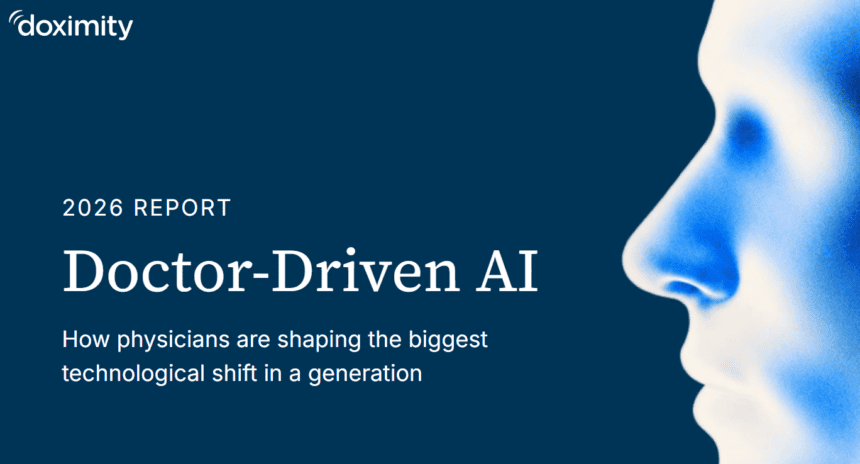
Just in time for one of healthcare’s biggest AI tradeshows, Doximity put out a survey that sharpened one of its biggest double-edged swords: doctor-driven AI leads to AI-driven doctors.
AI is everywhere. Doximity surveyed 3,379 physicians and found that 85% are now using AI for work at least weekly, up from 51% a year ago.
- 52% of physicians use it daily, up from 37%.
- Oncologists lead at 93% weekly, followed by Nephrology (65%) and Radiology (64%).
- Even physicians in their 70s are at 66% weekly AI usage.
Trust runs deep. Physicians place the most trust in AI for literature search (94%), generating differentials (87%), and treatment recommendations (86%).
- They’re most excited about AI’s potential in other areas: work-life balance (65%), a lighter admin workload (59%), and more time for patients (52%). The order says it all.
Skepticism also runs deep. More than half still name accuracy and reliability as a top concern, and three in four caught a factual inaccuracy in the past year.
- Tech isn’t the only adoption barrier. A third of physicians cite legal and regulatory uncertainty as their top limiter, and 27% point to patient privacy or data security.
Tell me something I don’t know. Two-thirds of docs say AI has improved their skills and knowledge.
- 81% say AI has taught them something clinically new (an updated guideline, an alternative diagnosis, an untried treatment), and 22% say it happens frequently.
What happens when AI is everywhere? Real-world skill could be nowhere, and 61% of docs worry about what AI will do to the skills of residents, fellows, and other trainees.
- 30% cite skill erosion as a top limit on their own AI use, climbing to 43% among physicians 30 and under – the group using it most.
The Takeaway
Doximity’s latest numbers show that AI is officially everywhere. That’s almost as spooky as the report’s cover image for residents worried about building their skills, but most of us would still rather have our doctor use a calculator if needed, even if the invention made them worse at mental math.
|
|
|
|
It’s always a big day when a company is born, or at least moves out of the house, which is what happened after Lumeris announced that its Tom primary care platform now lives within its own company, Tom Health.
Tom was built to take action… not just identify the steps that need to be taken.
- Lumeris recognized the gap through 20 years of experience building solutions that help health systems and physicians succeed in value-based care.
- That happens during visits, but a patient’s health doesn’t stop at the office…enter Tom.
Walk with me for a sec. Imagine your new blood pressure medication has been making you feel weak and dizzy, but when you call the doctor’s office, they tell you it will be a month before they can get you in. What now?
That’s where Tom steps in:
- Recommending next best actions grounded in patients’ actual care journeys.
- Providing personalized care and 24/7 medication support between visits.
- Reassessing symptom changes and elevating concerns to providers.
Provider capacity is a constant battle. That’s especially true in primary care.
- One in three Americans lack a primary care provider.
- PCP shortages affect 65% of rural U.S. communities, which already face higher risks of chronic conditions, and are especially vulnerable to fragmented care.
That’s why Tom is spreading his wings. Through Tom Health, patients now have access to a company that’s solely devoted to Primary Care as a Service, and it’s debuting with the rare benefit of a proven track record, existing health system partnerships, and $55B in claims already handled.
The Takeaway
Tom Health is a new company for a new era of primary care. Instead of tools that identify and prioritize to-dos, it gives providers what they actually want – AI that increases their capacity when increasing headcount isn’t an option.
|
|
Meet Tom at HLTH
Health happens everywhere. Care should too. Lumeris believes everyone deserves access to high-quality primary care wherever life happens, which is why Tom delivers exactly that. Discover how Tom is bringing patients better care between visits and giving physicians more time for meaningful conversations. You can also meet Tom in-person at HLTH Booth 4524.
|
|
Inside the GLP-1 Patient Journey
Withings just showed what 2,500+ patients reveal about the care gaps in weight-loss treatment. The survey of connected-scale users on GLP-1s – current, former, and prospective – mapped their treatment journey, where care breaks down, and where remote monitoring fits in. Get the full report.
|
|
How MetroHealth Broke the “Telehealth Ceiling”
Traditional telehealth leads to a dead end for too many patients. To reach its full potential, virtual care needs a reboot. The MetroHealth System partnered with Ovatient to do just that with a new virtual-first care model built on the EHR and connected to patients’ ongoing care journeys. A study of 50k patient encounters shows the results: every patient was able to get a new appointment within 3 days, and 35% of virtual primary care patients were net new or re-engaged. Get the keys to MetroHealth’s strategy in the full report.
|
|
- Super Intelligence Roadmap: CMS just printed its roadmap for accelerating safe and reliable “Super Intelligence” in healthcare. It maps out the government’s role in catalyzing innovation through protecting patient control, clarifying the rules of the road, and perhaps most importantly, paying for outcomes that improve health and lower cost. The last component will apparently involve extending the ACCESS model to primary care for additional chronic condition pathways, as well as “creating structures to enable SI-led solutions to participate in CMMI models designed to manage primary care and total cost of care.”
- UpToDate Gets Agile: Wolters Kluwer is acquiring AgileMD for UpTo$100M, including $40M upfront and another $60M in incentives to move UpToDate Expert AI even deeper into clinical workflows. The 23-person startup has two core products coming with it: Pathways, which weaves a hospital’s local guidelines throughout its EHR, and eCART, an FDA-cleared surveillance engine that flags deterioration hours before a code. AgileMD expects $7M in ARR by year-end, so WK clearly sees potential to boost that through better distribution – fair enough considering Expert AI is already in over 2,700 U.S. hospitals.
- Withings Scales Up for GLP-1s: Withings unveiled the hotly anticipated Body Pro 3, a cellular scale with a retractable handle that brings DEXA-style segmental body composition tracking into the home. Body Pro 3 estimates fat and muscle for each limb plus a visceral fat index with a fat-mass correlation that’s rivaled only by actual DEXA scans. The debut is particularly helpful for GLP-1 patients and their care teams, with a model trained on tens of thousands of real GLP-1 journeys that flags patients drifting off track so clinics can tell weight loss from muscle loss.
- Previsit Summaries Help Patients: Could AI summaries help patients better navigate their treatment? A new NEJM study says… probably. Among 300 neurosurgery patients randomized to receive either usual care or AI-generated previsit summaries, the plain-language summaries improved patient-rated involvement and led to 21% shorter appointments (25 vs. 33 minutes). The shortened visits didn’t sacrifice how much empathy patients felt from providers – patients even reported a slight uptick in quality for the shorter interactions – but the docs noted the consults were marginally more demanding for the well-prepped patients.
- Inovalon Fills M&A Prescription: Inovalon is acquiring DrFirst, adding e-prescribing, medication prior auth, real-time benefit checks, and patient engagement to an analytics firm looking to expand beyond HEDIS scores and risk adjustment. The combination will serve 2,000+ hospitals and 240k prescribers writing hundreds of millions of prescriptions a year, giving Inovalon a live feed at the point of prescribing. Terms weren’t disclosed, but it seems like every analytics vendor is moving closer to the workflow.
- Optain Raises $13M: Optain Health reopened last year’s Series A for another $13M, taking it to $39M a year after a successful U.S. launch. Its portable camera images the retina without dilation, and its AI flags diabetic retinopathy, glaucoma, and macular degeneration while reading cardiovascular risk off the retinal vessels. Health systems have been expanding the screening across more sites, which adds up considering that one primary care stop with Optain in the room closes a lot of care gaps.
- Virtual Care Has Fans, Not Habits: Bridge’s 2026 Virtual Care Report says virtual care has won the trust battle, but is still losing the habit war. Among telehealth users, 91% were satisfied, two-thirds said their last visit fully resolved the issue, and 80% would use it again for similar issues. Patients still prefer in-person care overall, so great experiences haven’t turned into routines. Bridge expects the next growth phase to be about converting one-timers into regulars, not skeptics into believers.
- Personifying Wellness: Personify Health rebuilt its wellbeing platform ahead of a 2027 go-live for employers, adding a pair of new capabilities for 30M members that now live in a world where “wellness is a commodity.” Adherence keeps members on a care plan once a health issue actually shows up, and its Percy AI companion routes patients to in-network providers vetted for quality and cost. With family premiums topping $28k, Personify is going all-in on bending the cost curve.
- 18-Second Prior Auths: Surescripts and athenahealth just expanded Prior Authorization Automation to nearly 98% of prescribers on athenaOne and grew the covered list to 200 medications (from 83 last year). The tool pulls clinical information from the chart and sends it to the PBM so approvals can land before the patient leaves the exam room. Better yet, median approval time last year was just 18 seconds when everything lined up.
- Coloring in Cancer Care: Color Health announced ten clinical collaborations with NCI-Designated Cancer Centers to help patients access specialized care faster. The partnerships are geared toward getting newly diagnosed cancer patients into their first oncology appointment within seven days, rather than the several weeks they’re currently waiting. Those weeks make a difference, and Color’s oncologists get the most out of them by pre-ordering MRIs, bloodwork, and medical records, which allows the first visit to be used for discussing treatment instead of scheduling tests. Launch partners include a who’s who of cancer care, such as MSK, UCSF, Mount Sinai, and Moffitt.
- Drug Discounts Spike Spending: The 340B drug pricing program was created in 1992 to make medications more affordable for low-income communities, but a new AJMC study revealed it may be having the opposite effect. As of 2024, the initiative was associated with an additional $75B in annual healthcare spending. About $15M of that came from out-of-pocket costs. The exact communities meant to be benefiting from the policy may be the most impacted, as elevated 340B activity was associated with an average of 1.5% higher total spending and 2.8% higher OOP spending.
|
|
The Capacity You’ve Been Searching For
LOLA handles the tasks that overworked care teams can’t. Tucuvi’s LOLA care management platform has years of real-world deployment at health systems that needed more capacity to better support their patients. With 95.3% average engagement across protocols ranging from heart failure to COPD, the evidence is in the numbers. Check out Tucuvi’s engagement report.
|
|
Making the Case for AI
Healthcare organizations have a lot to gain from implementing AI that can enhance coding accuracy and quality metrics, but securing buy-in from leadership is a crucial first step. Check out Navina’s new guide by Dr. Michael S. Barr to see exactly how to demonstrate clear financial benefits, ROI potential, and alignment with organizational priorities to help ensure AI projects are successful.
|
|
How Clinicians Are Using AI to Find Relief
Clinicians are facing a documentation burden that’s outpaced every attempt to contain it, and they’re adopting AI to tackle the crisis faster than health systems can keep pace. Download Heidi’s new report to see how over 1,800 clinicians around the world are already using AI to find relief, and what that means for the institutions still catching up.
|
|
- Turning Ideas Into Action: Healthcare has never been short on great ideas. What is new is the ability to turn them into reality at the pace patients need. Discover how Bunkerhill Health is closing the distance between knowing and doing, so providers can get back the two things they never have enough of: the time and the clarity to care for people.
- Making Healthcare Feel More Human: Abridge has always believed that the best healthcare technology should make healthcare feel more human. That means focusing on the most human signal we have: the conversation. Head over to CEO Shiv Rao’s latest blog to see Abridge’s vision for bringing the broader healthcare ecosystem into the picture, so clinicians can focus more on the practice of medicine and less on the process of medicine.
- State of Payor Enrollment and Credentialing: Over half of provider orgs are losing revenue due to credentialing delays – with many missing out on over $1M annually. Medallion’s new report unpacks the forces quietly undermining operational and financial performance, and how leaders across the industry are addressing them. Head over to the full report to get insights tailored to your role and org type.
|
|
|
|
|