|
Cadence, Bad Bots, and OpenEvidence Enters FDA Territory
By Jason Barry, Virginia Hunt, Jack Troy
June 25, 2026
|
|
|

|
|
Together with
|

|
|
|
“A lot of what separates great care from average care is programmatic: medication optimization, personalized follow-up, early deterioration detection, and timely escalation. Those things can be systematized. They can be automated. They can reach people who today wait four months to see a specialist, or never see one at all.”
|
|
Cadence CEO Chris Altcheck
|
|
|
On deck: nine-figure funding rounds, major strategy shifts, and some good ol’ fashioned LLM bashing to balance out all the “AI is better than doctors” talk.
If you didn’t catch it on Monday, make sure to check out Glooko’s Annual Diabetes Report over on our website. It was packed with great data highlighting the blind spots of traditional diabetes measures, how proactive management can help, and the implications for health systems.
Cheers.
Jason
|
|
|
|
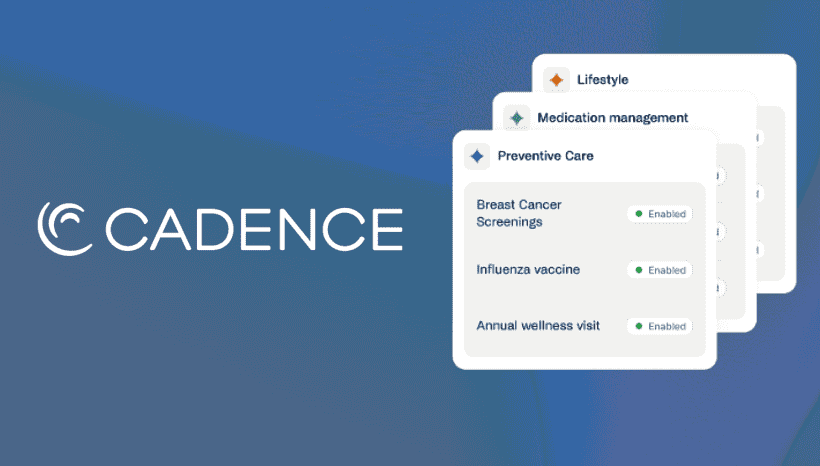
One of the hottest names in chronic care just got nine-figures hotter after Cadence hauled in $100M of Series C funding to scale up with AI agents.
Welcome to the unicorn club. The round vaulted Cadence’s valuation to $1.2B as it looks to extend the reach of its Clinical Intelligence platform to more patients managing chronic conditions like hypertension, diabetes, and heart failure.
- The platform is purpose-built to deliver continuous support between visits, with regular vital monitoring and AI agents that translate the data into timely medication adjustments and personalized lifestyle coaching.
- Cadence integrates directly with its partners’ EHRs and clinical workflows, then equips every patient with connected devices that allow its system – supervised by physicians – to flag high-risk patients and predict adverse events before they happen.
Cadence lets its numbers do the talking. It’s easy to see why.
- 70% relative improvement in blood pressure control (JACC).
- 27% fewer hospital admissions (Mayo Clinic Proceedings).
- 230% increase in heart failure patients on GDMT (JCF).
- $1,300 annual cost reduction per patient (Circulation).
Now it’s time to scale. Cadence is already treating 100k patients, and this investment will support the infrastructure “to treat millions.”
- The current partner roster includes over 20 major health systems, including new additions like Texas Health Resources and Duke Health, which liked working with Cadence so much that it participated in the round.
- The word on the street is annualized revenue is pacing $140M for FY 2026, more than double the $62M it brought in last year.
Last but not least. Scaling from thousands of patients to millions of patients is no small task, and Cadence is working on deploying new AI agents to help carry the load.
- A new prescription hypertension management agent is reportedly en route, which “pre-authorizes” medication recommendations to steer patients toward their blood pressure goals, with new prescriptions and dose changes made autonomously by the AI.
- That falls squarely in medical device territory, and Cadence is actively working with regulators to bring it to patients – including an application to the FDA’s TEMPO pilot that will let certain devices for chronic care on the market before they’re officially approved.
The Takeaway
Chronic disease is the single largest driver of healthcare spending in America, and a significant amount of that cost is avoidable. Cadence is building the tools to avoid it, and another $100M should only help the cause.
|
|
Solving Patient Leakage with Virtual-First Care
Patients expect more from their healthcare – easy self-scheduling, ample availability, and appointments that allow them to get high-quality care wherever and whenever they need it. If your health system isn’t offering that, someone else is. Download the new white paper from Ovatient to see how health systems can look beyond traditional telehealth solutions to deploy an EHR-integrated, virtual-first care model that expands patient access and choice, builds long-lasting care relationships, and reduces leakage.
|
|
VBC 202: Intro to VBC and Risk Adjustment
Navina and Out-of-Pocket teamed up to create VBC 202, a three-part online course for anyone looking to build or scale value-based care programs. Watch the first session on-demand to learn why VBC emerged, how policy shapes provider behavior, and the fundamentals of risk, quality, and financial performance. Gary Pilling II joins as the guest instructor to dive into risk adjustment basics, including RAF scoring, HCC coding, and the CMS-HCC V28 model.
|
|
- OpenEvidence Grabs FDA-Cleared AI: We have a new biomarker for heart disease, and it’s heading straight to OpenEvidence. Doctors using OpenEvidence will soon be able to upload an image of an electrocardiogram to see whether a patient has structural heart disease, thanks to an FDA-approved AI algorithm from Pathway Labs. AI has been turbocharging the diagnostic potential of EKGs by detecting signs of disease that are tough to spot for even skilled cardiologists, and Pathway is among a growing crop of startups looking to capitalize. Chances are we’ll see plenty more licensing deals where this came as OpenEvidence continues expanding its definition of “clinical support.”
- Bad Bots: Research in BMJ Open confirmed that getting health advice from popular LLMs is a coin flip. The study evaluated how leading LLMs (circa June 2025) handled 50 prompts across five categories plagued by misinformation: cancer, vaccines, stem cells, nutrition, and athletic performance. The chatbots (ChatGPT, Gemini, Meta AI, Grok, DeepSeek) provided inaccurate or potentially harmful health advice in 49.6% of cases, and nearly 20% of the responses were “highly problematic” – potentially causing severe harm if followed. Prompt type mattered, with open-ended prompts (e.g. asking for health regimens) producing more problematic answers (32%) than closed, fact-based questions (7%).
- Ambience Nursing Suite: Ambience expanded its nursing suite with new tools to support inpatient nurses across their entire shift, from pre-shift prep through documentation. Nursing Summary surfaces a full clinical and psychosocial picture before the shift even starts, while Ambient Flowsheet Documentation listens as nurses talk through their assessments and fills in structured flowsheets automatically. The new capabilities round out the suite alongside Chart Chat for Nursing, which debuted earlier this year.
- Patients Portals Catch On: JAMA just published what might be the largest-ever analysis of Epic EHR communications, and it showed that portal messages aren’t a replacement for in-person care. Drawing on 8B+ patient-provider interactions across 2k hospitals and 47k clinics from 2020 to 2025, NYU Langone researchers found that portal messages jumped 153%, while phone calls fell 6%. In-person visits ticked up as well (2.37 to 2.77 per patient per year), which the authors took as a sign that digital channels add to clinical workflows rather than displacing them.
- Redox AI Launch: Redox debuted a range of new AI capabilities to give healthcare orgs a stronger data infrastructure layer to scale their AI investments. The Redox Engine interoperability platform was bolstered with an MCP server and AI Assistant Suite, which join the AI-powered composable workflow building blocks released last fall to help teams automate their integration workflows. Redox is aiming to be the “data foundation for AI in healthcare,” and the new features back that up.
- Prosper Nabs $30M: Voice AI platform Prosper has secured $30M in Series A funding to bring an end to transferred calls and long holds for patients and clinicians. Prosper positions its platform as a one-stop shop for the entire patient journey, combining scheduling, billing, and insurance verification while coordinating voice interactions across all parties involved. Early metrics look promising considering Prosper has reportedly come out on top in 80% of its competitive evaluations.
- Pep(tide) Rally: Endpoints put out a nice breakdown of how seven peptides relegated to the black market could soon be available at U.S. compounding pharmacies, but wider access is still probably months away. The FDA’s compounding committee will vote in July, likely in favor of fueling a peptide boom that already has the full support of HHS Secretary RFK Jr. Rulemaking happens next, and pharmacies could need up to nine months to source drug ingredients. From there, the multi-billion-dollar bonanza is on for these largely unproven treatments.
- Patient Keepage: Ovatient released a solid overview of why virtual-first care is one of the best solutions for “patient keepage.” The paper maps out how earning patient loyalty boils down to two key ideas: (1) making it easy for patients to access needed services within the health system, and (2) ensuring those services are available and visible at the right moment in the care journey. There’s lots of gems on how virtual-first care makes that happen, including making sure there’s no wrong door at the moment of need.
- Carta Expansion: Carta Healthcare expanded its Lighthouse AI clinical data abstraction assistant to support 21 additional clinical registries across 8 program families (including ACC/NCDR, STS, and AHA’s Get With The Guidelines). Carta’s “Hybrid Intelligence” model uses AI to propose answers to registry questions while clinical abstractors validate and finalize, an approach that’s been able to cut abstraction time up to 66% and slash costs in half while keeping inter-rater reliability above 98%.
- AI Closes Gap on Social Media: Nearly 3 in 10 US adults (29%) now use AI tools for health information at least monthly, up from 17% in June 2024, according to KFF’s latest tracking poll. That nearly-doubled figure now rivals the 31% who turn to social media for health info. Usage skews toward younger, uninsured, and lower-income adults, with many citing cost and access barriers as the reason they’re turning to AI. The catch is that most of these users never follow up with an actual clinician.
- Compliancy Acquires Healthicity: A pair of experienced compliance players have joined forces after Compliancy Group acquired Healthicity to create what it’s calling a complete platform for hospitals, payers, and vendors. The move brings Healthicity’s provider, coding, and documentation auditing capabilities under the same roof as Compliancy’s tools for workforce compliance, risk assessment, and incident management. The combined firm’s more than 3,000 global customers shouldn’t see any disruptions during integration.
|
|
Any Use Case, Any Specialty
Bunkerhill’s Carebricks platform doesn’t stop at surfacing insights. It translates them into real-world action. From automating prior auths to closing care gaps, Carebricks lets health systems design and deploy AI agents for any clinical or operational need – without adding to anyone’s manual workload. Learn how Carebricks can automate actions for your patients today.
|
|
Abridge & Availity Redefine Payer-Provider Synergy
Abridge is teaming up with Availity to redefine payer-provider synergy at the point of conversation. The collaboration aligns Abridge’s evidence-aware intelligence with Availity’s real-time health information network to create a first-of-its-kind prior authorization experience, with a shared understanding between patients, providers, and payers. Find out how Abridge and Availity are extending conversational intelligence across the revenue cycle.
|
|
Redefining Patient Monitoring for Obesity & Diabetes
Weight management programs live and die by adherence. Discover why partners like Calibrate,
9am Health, and Wondr Health trust Withings to keep members weighing in, with
cellular-connected scales that deliver instant weight insights, full body composition data, and the
lowest possible barrier to action throughout their weight loss journey.
|
|
- State of Payor Enrollment and Credentialing: Over half of provider orgs are losing revenue due to credentialing delays – with many missing out on over $1M annually. Medallion’s new report unpacks the forces quietly undermining operational and financial performance, and how leaders across the industry are addressing them. Head over to the full report to get insights tailored to your role and org type.
- Evidence, in the Flow of Care: Heidi brings trusted guidelines and peer-reviewed research directly into clinical workflows so decisions don’t stall care. Clinicians get clear, evidence-based answers without leaving the conversation. No ads, no limits, and no outside interests getting in the way of care. Find out how with Heidi Evidence.
|
|
|
|
|