|
Wearables, Teladoc, and New Frontier Models
By Jason Barry
June 4, 2026
|
|
|

|
|
Together with
|

|
|
|
“There’s a rising tide of wearable data, and the major AI platforms are only going to get smarter with it. If providers and EHRs don’t figure out how to absorb that and make sense of it, they’re going to be operating at a longer-term disadvantage.”
|
|
Xealth CEO Mike McSherry
|
|
|
Wearables are finally having their moment, but are they actually making anyone healthier? Today’s top story has all the answers (as long as they were in Rock Health’s new report;)
Jason
|
|
|
|
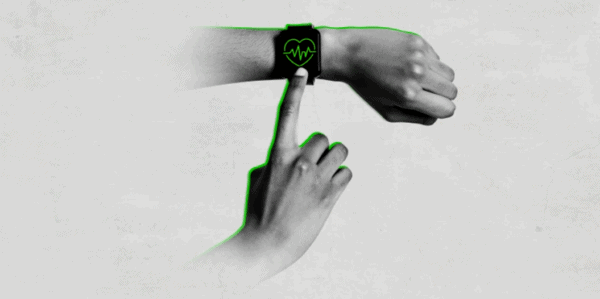
Wearables have come a long way since the first Apple Watch launched back in 2015, so Rock Health crunched the numbers from its latest Consumer Adoption Survey to see just how far they’ve actually come – and how far they have left to go.
Everybody’s health-maxxing. Rock Health’s survey data showed that 57% of U.S. adults now own at least one wearable or connected device [Chart: Wearable Ownership].
- Smart watches still dominate the form factor mix, but consumers have been building out their personal health tech ecosystems, with average ownership now up to 1.5 devices.
The engagement numbers are off the charts. Most wearable owners wear their devices 5+ days per week (83%) to track physical activity (35%), sleep (26%), and heart rate (21%).
- Nearly half of wearable owners (47%) have used a wearable for 3+ years, and only 23% have ever switched brands [Chart: Usage Snapshot].
So people are getting healthier, right? The general consensus is a resounding “maybe.”
- While certain populations – like those managing chronic conditions – would get a ton of value from continuously monitoring their health data, those that could benefit the most remain the least likely to own wearables.
- Part of that is because positioning reinforces reach. Oura’s marketing around finding a healthy balance resonates with yogis, and Whoop’s marketing around high-level performance resonates with marathon runners.
Either way, the data is coming to the visit. As consumers generate more health data, Rock Health highlighted a few key trends that are worth keeping an eye on.
- Vendors are crossing categories. Consumer-focused brands are piling into healthcare (Ex. Oura and Whoop launching telehealth services), and clinical-focused brands are heading in the opposite direction (Ex. Dexcom pushing the Stelo on metabolically curious consumers).
- Health systems need to choose wisely. New access points are disrupting typical patient flows and referrals. A consumer whose device flags irregular sleep patterns and routes them to a specialist may never loop in their traditional PCP. Systems will need to determine where partnerships can create real bridges.
- For public health, the next chapter will come down to whether wearables can evolve into infrastructure that improves outcomes for everyone. That will depend less on generating more data, and more on expanding adoption across underrepresented populations and earning trust on how data is collected and used.
The Takeaway
The technology has finally converged to the point where AI can distill practical insights from a soup of data from wearables, EHRs, and countless other sources. The question now is whether the health outcomes will follow.
|
|
Redefining Patient Monitoring for Obesity & Diabetes
Weight management programs live and die by adherence. Discover why partners like Calibrate,
9am Health, and Wondr Health trust Withings to keep members weighing in, with
cellular-connected scales that deliver instant weight insights, full body composition data, and the
lowest possible barrier to action throughout their weight loss journey.
|
|
How MUSC Is Bringing Care Closer to Home
MUSC Health teamed up with Ovatient to accomplish a simple goal: ensure access to care isn’t determined by a ZIP code. A third of South Carolina residents live in rural areas, but travel barriers don’t make preventative care any less crucial. See how Ovatient’s virtual-first approach is improving access to urgent care, primary care and integrated behavioral health and reducing leakage – without MUSC providers doing the heavy lifting.
|
|
- Mayo and Microsoft: Mayo Clinic and Microsoft are teaming up to develop a frontier AI model designed specifically for healthcare. The multi-year collaboration will combine Mayo’s de-identified clinical data and expertise with Microsoft’s AI and cloud capabilities, allowing the model to support never-before-seen levels of clinical reasoning, earlier diagnoses, and personalized treatment decisions, and improved patient outcomes. It will also be owned entirely by Mayo Clinic, although it sounds like other health systems will be able to access it via Microsoft’s Azure Foundry APIs.
- Teladoc Links With Walmart: Walmart announced that Teladoc is the latest virtual care partner to join its Better Care Services platform, giving customers access to on-demand urgent care, dermatology, and nutrition support. Teladoc has the largest network of virtual care providers in the country, and considering shares were up 15% on the news, investors seem to think Walmart customers are going to be lining up to treat their sinus infections for $89 per visit. That might be true, but Walmart also has some other strong partners like Included, Curai, and Wheel competing for those same patients.
- Setting the Standard: A Columbia-led research team published a new framework in NEJM AI to standardize EHR data formats and let AI researchers share code and compare models across organizations without exchanging actual patient data. The aptly named Medical Event Data Standard (its friends call it MEDS) takes aim at one of the biggest bottlenecks in clinical AI development – the fact that nearly every health system structures its EHR data slightly differently, making it nearly impossible to validate models or replicate findings across institutions.
- Oura Momentum: Oura followed up last week’s IPO headlines with the debut of a new blood pressure tracking feature alongside the launch of the Oura Ring 5, which is 40% smaller than the previous generation. The Ring 5 capitalizes on January’s FDA policy change that loosened oversight on wellness devices by not showing any systolic or diastolic readings, instead only nudging users when their BP shows a pattern worth looking into. When that happens, they can now connect directly with a physician without even leaving the app, courtesy of a new partnership with Counsel Health.
- K Health + Penn: K Health announced a multi-year partnership with the University of Pennsylvania Health System to deploy its suite of clinical AI agents so patients can get seen faster and clinicians can focus on higher‑acuity decisions. The agents conduct dynamic patient intakes and pre-populate draft charts inside the EHR before visits begin, starting with Penn Medicine On-Demand (the system’s virtual urgent care arm) before expanding to in-person primary care, cardiology, and dermatology. K’s been steadily stacking its partnership roster with big names like Northwell, Mayo Clinic, MGB, and Hartford HealthCare.
- Acute EHR Market Share: KLAS’ 2026 EHR Market Share report unsurprisingly showed that the big keep getting bigger. Epic added 77 acute care hospitals and 18,679 beds in 2025, lifting its market share to 43.7% (up from 42.3% a year ago). Most of the growth came from health systems with 2-10 hospitals as Epic broadened its reach to smaller orgs after dominating the upper end of the market. The other big story was “the 2025 purchase freeze,” with EHR decisions dropping 40% YoY as systems redirected capital toward AI and operational efficiency tools instead.
- H1 Raises $40M: Healthcare data platform H1 raised $40M from CVS Health to scale its AI-powered platform for provider discovery. H1 reports that 190M Americans use its doctor intelligence to find the right provider for their needs every year, and that 18 of the 20 largest life science companies use it to find the right doctor for medical research. The round also gives H1 direct alignment with one of the largest integrated healthcare players in the country (Aetna + Caremark + CVS Pharmacy) as it looks to step on the gas with commercialization.
- CVS Partners With Salesforce: In other CVS news, it expanded its decade-long Salesforce partnership to deploy Agentforce Health across Aetna and Caremark call centers,marking the largest Agentforce deployment to date. The agentic AI platform will automate routine tasks and surface real-time member insights to call center reps, letting them resolve inquiries in a single interaction whenever possible. CVS and Salesforce both hinted that the move is just another step along their journey to bring digital-first member experiences to healthcare.
- Vi Goes Vertical: Under-the-radar AI platform Vi launched a suite of vertically specialized AI agents to serve as the AI execution layer for healthcare, life sciences, and wellness enterprises – all fueled by $145M in fresh funding. The newly minted unicorn says its agents enable real-time decisioning across everything from patient navigation and physician next-best actions to clinical trial acceleration and drug commercialization. Over 100+ enterprise customers are already working with Vi to support 190M lives.
- CHAI Time: The Coalition for Health AI released its long-awaited AI governance framework outlining key considerations for health systems looking to scale AI responsibly. The framework consists of eight playbooks covering organizational policy, risk assessment, lifecycle management, data stewardship, and vendor oversight among other areas. The Joint Commission plans to offer a voluntary AI certification program this year, and the CHAI playbooks apparently provide the framework to achieve certification.
|
|
Execution for Every Workflow
Health systems have no shortage of ideas for improving care and operations. Bunkerhill lets them bring those ideas to life – at scale, across service lines, and around the clock. Discover how the Carebricks platform is empowering clinical and operational teams to deploy AI agents that turn the data they have into the actions they need.
|
|
VBC 202: Intro to VBC and Risk Adjustment
Navina and Out-of-Pocket teamed up to create VBC 202, a three-part online course for anyone looking to build or scale value-based care programs. Watch the first session on-demand to learn why VBC emerged, how policy shapes provider behavior, and the fundamentals of risk, quality, and financial performance. Gary Pilling II joins as the guest instructor to dive into risk adjustment basics, including RAF scoring, HCC coding, and the CMS-HCC V28 model.
|
|
- Same Tool, New Name, Better AI: DoxGPT is now called Ask, and it’s powered by a new agentic reasoning engine that delivers better, faster, and more reliable responses. Physicians can still find verified answers to complex clinical questions, integrated drug references, and full-text access to over 2,000 top journals – all in the Doximity workflows they’re already using every day. Don’t wait, Ask.
- The AI Hardware Built for Clinical Work: Phones were never meant to be propped on a desk for a 12-hour clinical day. Heidi Remote transcribes patient sessions offline, stores them securely on-device, and syncs to Heidi whenever you’re in range. Just clip on and get to work with the Heidi Remote.
- State of Payor Enrollment and Credentialing: Over half of provider orgs are losing revenue due to credentialing delays – with many missing out on over $1M annually. Medallion’s new report unpacks the forces quietly undermining operational and financial performance, and how leaders across the industry are addressing them. Head over to the full report to get insights tailored to your role and org type.
|
|
|
|
|




![[Chart: Wearable Ownership]](https://rockhealth.com/wp-content/uploads/2026/05/Graphic-1_Wearables_CA2025-1024x576.jpeg)
![[Chart: Usage Snapshot]](https://rockhealth.com/wp-content/uploads/2026/05/Graphic-2_Wearables_CA2025-1024x576.jpeg)