|
IPOura, Brook Health, and OpenEvidence Starts a Family
By Jason Barry and Virginia Hunt
September 10, 2026
|
|
|

|
|
Together with
|

|
|
|
“At the end of the day, humans are humans. They’re the ultimate variable in healthcare. You can have the best plan in place, the best workflows, and a patient still won’t answer their phone for a few weeks. Our job is to identify what’s really important to an organization, then put the right pieces in place to support them.”
|
|
Brook Health Chief Nursing Officer Alex Foley MSN, RN
|
|
|
Brook Health Chief Nursing Officer Alex Foley joined us on the latest Digital Health Wire Show to discuss how to improve the longest stretch of any patient journey: the distance between visits. Catch the full episode to see what’s possible when patients and providers have access to truly continuous care, and how AI is already connecting the dots between the processes, pathways, and protocols to make it happen.
Go Rams,
Jason
|
|
|
|
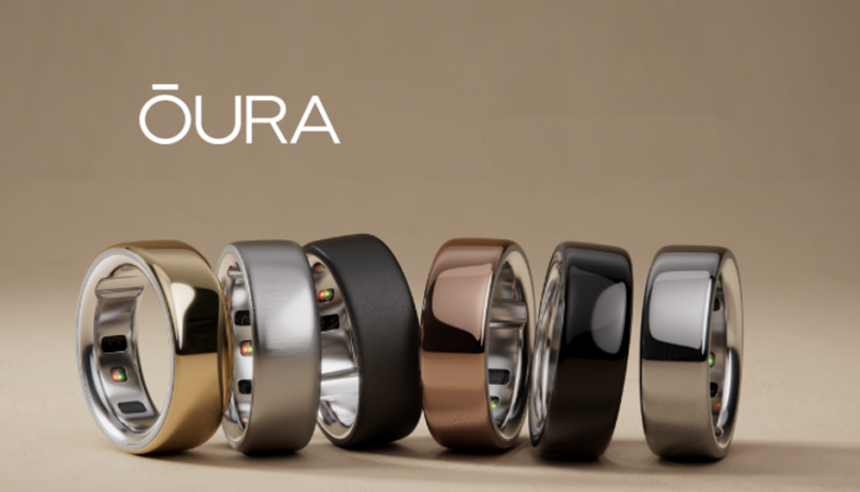
It didn’t take long for the Oura IPO rumors to turn into a bonafide S-1, giving us the first real look under the hood of a consumer health company looking to get its AI healthcare platform credentials (and the valuation that comes with them).
Oura’s been busy polishing up the balance sheet. The smart ring OG is on its way to ring the Nasdaq bell ($OURA) with the kind of financials most digital health companies only dream of:
- $1.2B in revenue for the nine months ended June 30, up 74% YoY.
- $61M net income on 55% gross margins, up from $1.6M in the same period last year.
- 5M paid members wearing their ring 23 hours a day.
Not too shabby. The last bullet is especially impressive, made possible by 94% of activations converting to memberships with a juicy 85% annual retention.
- Bloomberg reports that Oura is seeking $3B at a $16B+ valuation, up from the $11B notch in its valuation belt that it earned in last October’s $900M Series E.
Those definitely aren’t jewelry numbers. Oura has been positioning itself as an AI-powered health platform sitting on 42B hours of longitudinal biometric data, a dataset that grew 83% in the past nine months alone.
- It also boasts 1,200+ integration partners that feed clinical data back into the platform.
- The member base also looks more like a patient population than the fitness crowd most people would expect: 72% women, more than half reporting at least one chronic condition, and 37% with household incomes under $100k.
Small healthcare beachheads are still beachheads. Oura backs up the health platform by bringing its ring to places like Essence Healthcare’s MA plan (where roughly a third of members opted in), a Cigna benefit collaboration, Lumeris’ care pathways, and Maven Clinic.
- There’s also the recent Counsel Health partnership that put AI-guided physician consults directly inside the Oura app, and a nice industry ally in partner-turned-investor Dexcom.
Now for the best part of any S-1: the risk factors. Memberships are only 20% of revenue, so this is still a hardware business at its core.
There’s also a nice pearl about early investors reportedly cashing out $1.09B before the public gets its turn, and a well-timed class action to challenge the accuracy of Oura’s sleep staging numbers.
The Takeaway
Every company has its risk factors, but we’ll always cheer for a big digital health-ish exit. That said, Oura’s S-1 spent a lot of pages telling the SEC what it won’t promise for a company selling “predictive health.”
|
|
Redefining Patient Monitoring for Obesity & Diabetes
Weight management programs live and die by adherence. Discover why partners like Calibrate,
9am Health, and Wondr Health trust Withings to keep members weighing in, with
cellular-connected scales that deliver instant weight insights, full body composition data, and the
lowest possible barrier to action throughout their weight loss journey.
|
|
How Clinicians Are Using AI to Find Relief
Clinicians are facing a documentation burden that’s outpaced every attempt to contain it, and they’re adopting AI to tackle the crisis faster than health systems can keep pace. Download Heidi’s new report to see how over 1,800 clinicians around the world are already using AI to find relief, and what that means for the institutions still catching up.
|
|
- OpenEvidence Starts a Family: OpenEvidence split its unified AI answer engine into a family of three, shipping a trio of “new” models with the same accuracy bar, but different think times. Osler has the shortest attention span at 5 seconds (the new default), Sackett will think a bit longer if multiple evidence sources need to be weighed (30 seconds), and Snow will dive into a full literature investigation for 5 minutes. Now that we’re done burying the lede, a fourth model dubbed Darwin was also unveiled and is still in research preview, although so far that preview has included the first-ever 100% score on the MedQA benchmark.
- The Rise of FDEs: A gem of a Forbes article from the one-and-only Spencer Dorn unpacked the meteoric rise of forward-deployed engineers in healthcare. The full article is well-worth the five minutes just for all the stellar quotes, but the 10-second version is that FDEs sit alongside front-line users to understand their problems, then build and refine software to solve them. This proximity has three benefits: (1) better product discovery from closely observing workflows and edge cases, (2) bundling discovery and building only accelerates execution, and (3) FDEs can adapt solutions to local context rather than forcing a fixed product. “This matters because health systems are a bit like snowflakes.”
- Adherence Issues: Bad day to be a medication adherence algorithm. A systematic review of 41 adherence studies in npj Digital Medicine found that “the clinical readiness of published prediction models is uncertain,” a nice way of saying that a whopping 71% of models raised serious concern on development quality and 80% had a high risk of bias in evaluation. The most common culprits were poorly defined adherence outcomes, inadequate handling of missing data, and limited validation. Worse yet, discrimination did not consistently improve with more complex algorithms, indicating that methodological rigour, rather than model type, is the key barrier to translation.
- FDA Clearance ≠ Clinical Benefits: A new PLOS Digital Health study found that just three of the 1.3k+ FDA-cleared AI medical devices were evaluated for patient outcomes. That means only 0.2% of cleared AI devices were judged on areas like mortality or morbidity. Only 2.5% of the tools were linked to prospective trials, and just 0.9% went through peer-review. That’s apparently what you get when 510(k) clearance only requires “substantial equivalence” to an established device, as opposed to proof of safety and effectiveness.
- PatientIQ Scores $30M: PatientIQ ended a four-year funding drought by soaking up a $30M Series C. Over the same period, the patient-reported outcomes startup more than quadrupled the number of hospitals using its platform to collect PROs and integrate them right into EHRs. While clinical workflows are its bread and butter, the company has also offered up its software (and its database of 70M outcomes) to researchers and life-sciences companies.
- AI or Bust: Silicon Valley Bank’s H1 2026 check-in showed that bigger investments are going into fewer pockets as the AI power hour continues to fuel the entire healthtech market. One number was up: Healthtech’s $7.2B H1 set the sector up to outdo its 2025 funding ($13.5B). The other’s down: H1’s 203 transactions suggest deal volume could fall by nearly a third from last year. Makes sense after seeing that just six investments accounted for 50% of the H1 funding total, and our full breakdown on the website has you covered with the other 50%.
- GenHealth Grabs $16.5M: GenHealth grabbed $16.5M of Series A funding to bring AI-enabled administrative solutions to a health system near you, no new software required. The startup claims its back-office agents have an edge due to its proprietary model that was trained on real-world clinical data from 140M patients and built for browser-based integration into existing clinical workflows. The investment comes after GenHealth quadrupled its revenue in the past six months. Who knows from what to what.
- FDA’s Breakthrough Device Update: The FDA issued an update to its list of medical devices granted Breakthrough Device designation. Through the third quarter of fiscal 2026 (ending June 30), the FDA granted Breakthrough Device status to 116 devices, compared to 164 for all of 2025. Over the program’s full history, 1,320 devices received the designation, of which 55 (4%) were radiology products, with higher percentages coming from cardiology (20%) and neurology (15%). In all, 210 Breakthrough Devices have gone on to receive FDA marketing authorization.
- Implicity Raises $40M: Cardiac RPM startup Implicity secured $40M of growth financing to fund its next phase of U.S. growth. The funds will back commercial hiring, U.S.-specific features, and continued AI development. Implicity’s AI software aggregates and analyzes cardiac data across device manufacturers, and has shown it can lead to a 26% mortality reduction versus conventional monitoring. The company also has an FDA-cleared heart failure prediction algorithm, and an ECG analyzer that can reduce false alarms by up to 76%.
- No Verdict on No Surprises: Billing intermediary HaloMD put out a new report suggesting that the No Surprises Act has successfully decreased emergency out-of-network health spending by up to 52% since kicking off in 2022 – with potential savings to the tune of $4B. The think tanks and policy experts were quick to disagree, asserting that the infamous dispute resolution system boosts spending and benefits OON providers. As for the data disparities, critics note that Halo’s analysis focused exclusively on emergency medicine, which could easily be too narrow a snapshot.
|
|
Value-Based Care 301
Join our friends at Navina and Out-of-Pocket Health for a free, three-day live course featuring ten leaders from across the value-based care ecosystem. September 15–17, 12:00–1:30 PM ET. From ACO builders and population health execs to physicians and operations leaders, you’ll get practical strategies you can apply to your own organization straight from the people scaling some of healthcare’s most innovative VBC programs. Grab your spot today.
|
|
Making Healthcare Feel More Human
Abridge has always believed that the best healthcare technology should make healthcare feel more human. That means focusing on the most human signal we have: the conversation. Head over to CEO Shiv Rao’s latest blog to see Abridge’s vision for bringing the broader healthcare ecosystem into the picture, so clinicians can focus more on the practice of medicine and less on the process of medicine.
|
|
The Agentic Platform for Your Environment
Your care plans. Your patients. Every health system is unique, which is why Tucuvi tailors its agentic platform to the day-to-day realities of care delivery at each of its partners. With configurable protocols and seamless EHR integration from day one, LOLA is the AI voice agent care teams trust to reach every patient. See LOLA handle real care workflows with your use cases today.
|
|
- State of Payor Enrollment and Credentialing: Over half of provider orgs are losing revenue due to credentialing delays – with many missing out on over $1M annually. Medallion’s new report unpacks the forces quietly undermining operational and financial performance, and how leaders across the industry are addressing them. Head over to the full report to get insights tailored to your role and org type.
- Turning Ideas Into Action: Healthcare has never been short on great ideas. What is new is the ability to turn them into reality at the pace patients need. Discover how Bunkerhill Health is closing the distance between knowing and doing, so providers can get back the two things they never have enough of: the time and the clarity to care for people.
- Solving Patient Leakage with Virtual-First Care: Patients expect more from their healthcare – easy self-scheduling, ample availability, and appointments that allow them to get high-quality care wherever and whenever they need it. If your health system isn’t offering that, someone else is. Download the new white paper from Ovatient to see how health systems can look beyond traditional telehealth solutions to deploy an EHR-integrated, virtual-first care model that expands patient access and choice, builds long-lasting care relationships, and reduces leakage.
|
|
|
|
|


